Artwork story
About The Genius of Castiglione
The artist and artwork
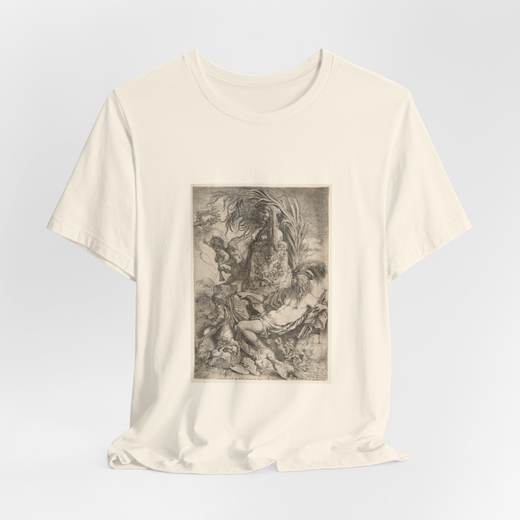
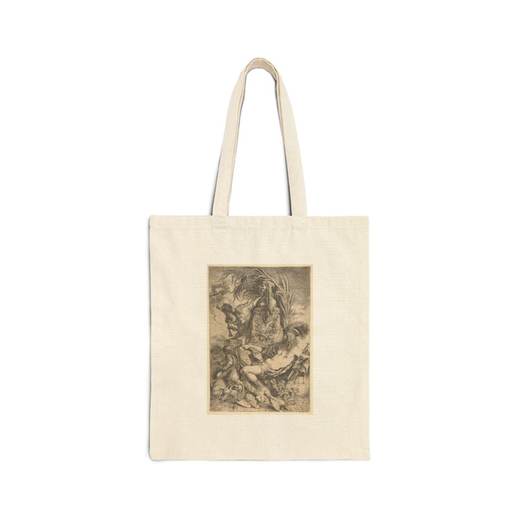
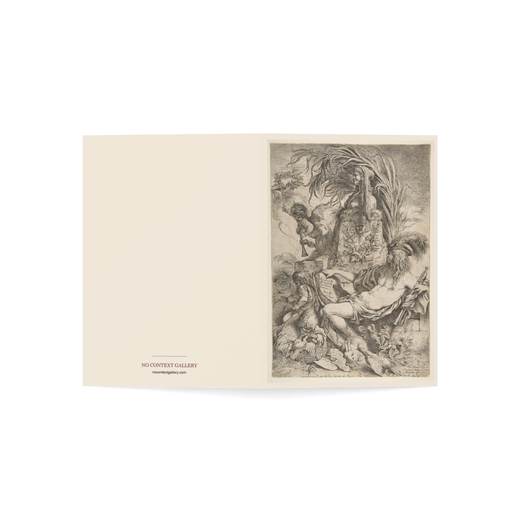
Giovanni Benedetto Castiglione etched The Genius of Castiglione in Genoa around 1645–47. One of roughly sixty etchings he made, the sheet shows the lively, accumulating line that made him one of the seventeenth century’s most inventive printmakers. Anthony van Dyck, whose Genoese studio Castiglione knew, shaped his art; so did Rembrandt’s prints, brought into the port’s artistic network. Castiglione took the copperplate to Rome in 1647, where Giovanni Giacomo De Rossi published it the following year.
The world around it
The print’s route from Genoa to Rome reveals a mobile Baroque art world connected by ports, publishers, patrons, and reproducible images. De Rossi dedicated the 1648 edition to Matthys van de Merwede, a Dutch nobleman traveling in Italy between 1647 and 1650. The same year brought the Peace of Westphalia and the end of the Thirty Years’ War, while this cross-border dedication turned artistic invention into a form of reputation that could travel. Etching let a painter’s hand reach collectors far from the place where the plate was first drawn.
A detail to notice
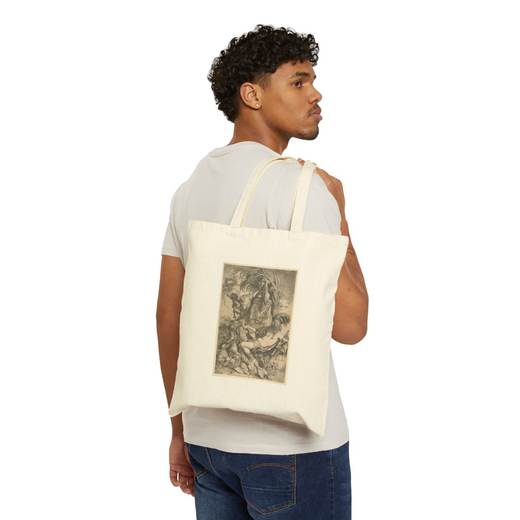
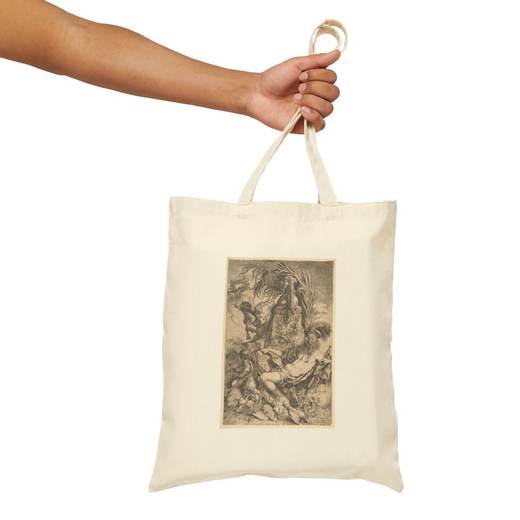
Despite the title, the reclining young man is not Castiglione’s self-portrait. The Latin words on his book identify the artist’s genius in the ancient sense of a guiding spirit, while the youth himself represents Fame. He carries a trumpet; above him, a putto sounds another and points toward a laurel wreath. Around them, Castiglione builds an inventory of achievement: a rabbit and basket of birds signify fruitfulness, while a palette, brushes, and sheet of music stand for the arts. Yet those creative tools lie scattered on the ground, and the music is crumpled. The image praises invention while questioning how long human accomplishment lasts, a darker idea concealed inside its theatrical abundance.
Look closer: materials, scale, and subjects
The recorded object is print made in Etching and held in the Drawings and Prints department.
Recorded dimensions include 14 x 9 5/8 in. (35.5 x 24.5 cm).
Subject terms include Musical Instruments, Birds, Men, Women, Putti, and Rabbits. Treat them as guideposts, not a complete interpretation.
Collection history and public-domain source
The collection credit line is Purchase, Joseph Pulitzer Bequest, 1917.
The individual artwork page and official image were verified as Public Domain on 2026-08-23.
No Context Gallery independently uses the public-domain image. The source museum has not endorsed, sponsored, or affiliated itself with these products.
Research sources
See the products currently available with this artwork. Product choices appear only when the exact item is published, in stock, and available to purchase.