Artwork story
About The Unicorn Purifies Water (from the Unicorn Tapestries)
The artist and artwork
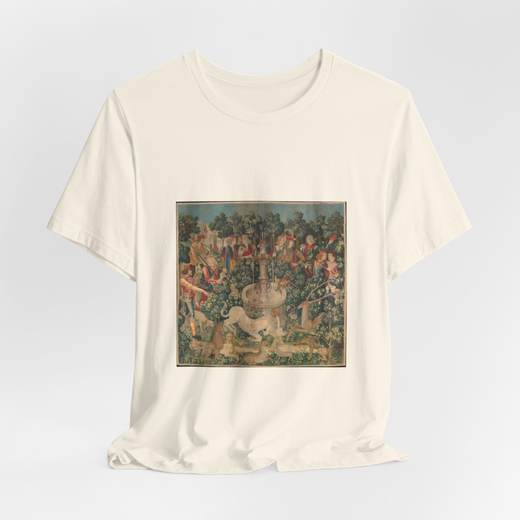
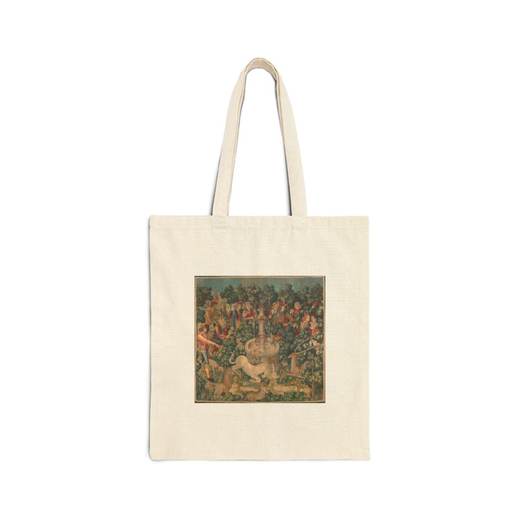
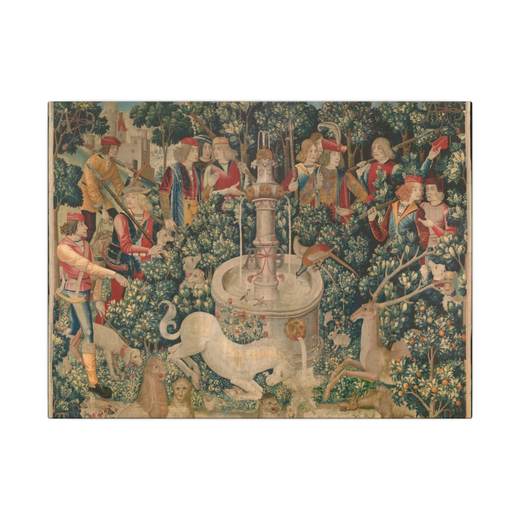
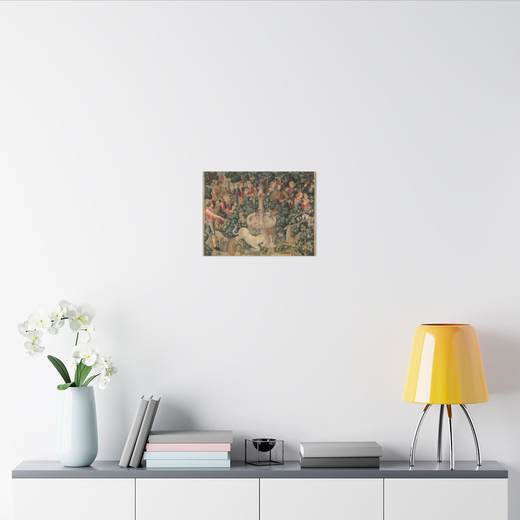
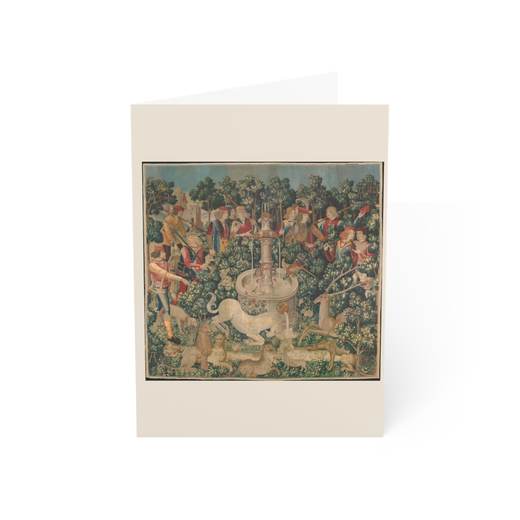
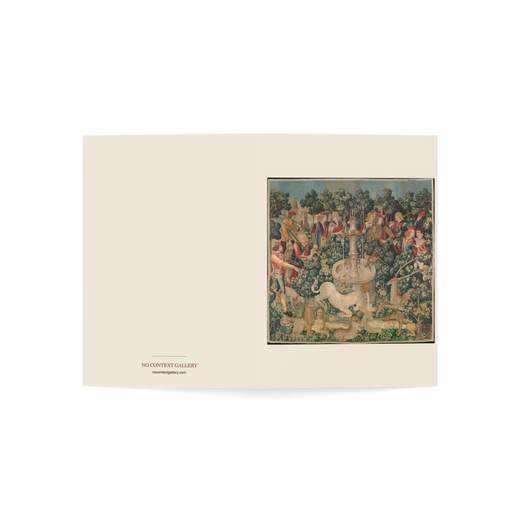
Unknown designers and weavers made The Unicorn Purifies Water between 1495 and 1505. The Met describes its culture as French for the cartoon and South Netherlandish for the weaving; the set was probably designed in Paris and woven in Brussels. Wool forms the warp, while silk, silver, and gilt wefts add brilliance. Nearly twelve feet high and more than twelve feet wide, the tapestry turns a kneeling white unicorn, stone fountain, hunters, animals, and dense plants into a monumental picture.
The world around it
Around 1500, unicorn lore belonged to courtly hunting, natural history, Christian symbolism, and marriage imagery at once. The hunt unfolds like a stag hunt, but the magical quarry also could symbolize Christ or a beloved tamed by a maiden. Europeans prized supposed unicorn horns for their power against poison; many were actually narwhal tusks traded from northern waters. The hangings are first documented only in a 1680 inventory of the La Rochefoucauld family. Their original patron remains unknown, despite the recurring woven cipher “AE,” and scholars still debate their intended sequence and meaning.
A detail to notice
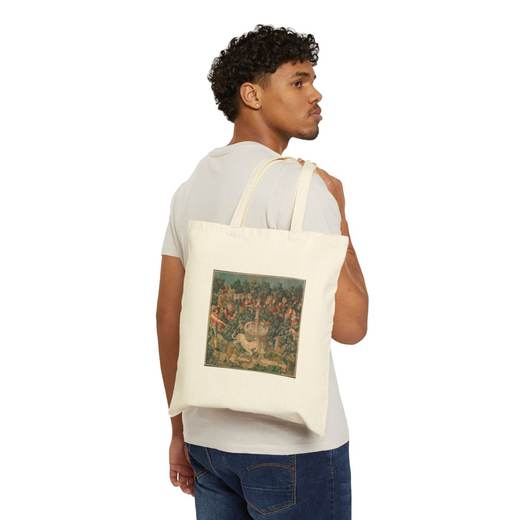
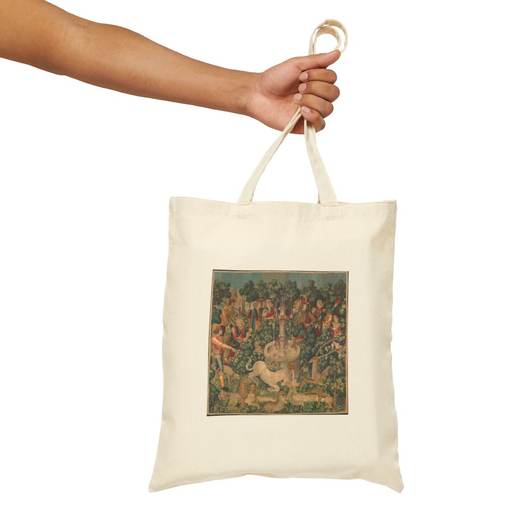
This scene pauses before the chase turns violent. Twelve hunters watch from behind the fountain while the unicorn dips its spiraled horn into the stream. Pheasants and goldfinches perch on the basin; lions, a hyena, rabbits, a stag, dogs, and other animals wait among flowering plants. The supposed purification is reinforced botanically: sage, pot marigolds, and orange, all associated with antidotes in medieval herbals, grow close to the water. The orange tree at lower right bears flowers and fruit simultaneously, unusual but accurate, and represents a sweet orange introduced to Europe around 1500. Metallic threads once made parts of this crowded surface shimmer. The weavers therefore joined myth to close observation: the poison-curing horn is imaginary, but the plants, animals, clothing, and suspended instant of astonishment are rendered with persuasive physical detail.
Look closer: materials, scale, and subjects
The recorded object is tapestry made in Wool warp with wool, silk, silver, and gilt wefts and held in The Cloisters.
Recorded dimensions include Overall: 145 x 149in. (368.3 x 378.5cm).
Subject terms include Birds, Fountains, Men, Unicorns, Pheasants, and Deer. Treat them as guideposts, not a complete interpretation.
Collection history and public-domain source
The collection credit line is Gift of John D. Rockefeller Jr., 1937.
The individual artwork page and official image were verified as Public Domain on 2026-08-23.
No Context Gallery independently uses the public-domain image. The source museum has not endorsed, sponsored, or affiliated itself with these products.
Research sources
See the products currently available with this artwork. Product choices appear only when the exact item is published, in stock, and available to purchase.