Artwork story
About Orpheus Charming the Nymphs, Dryads, and Animals
The artist and artwork
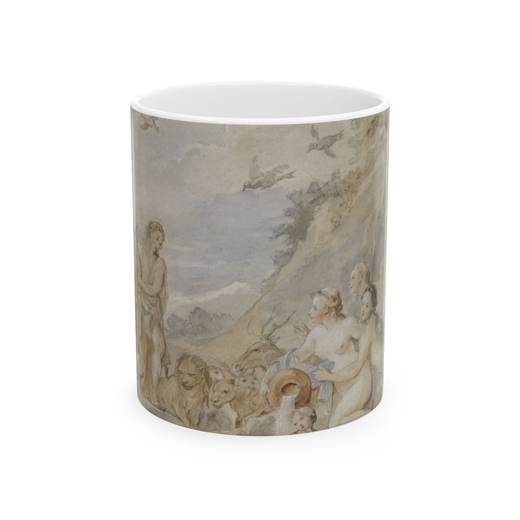
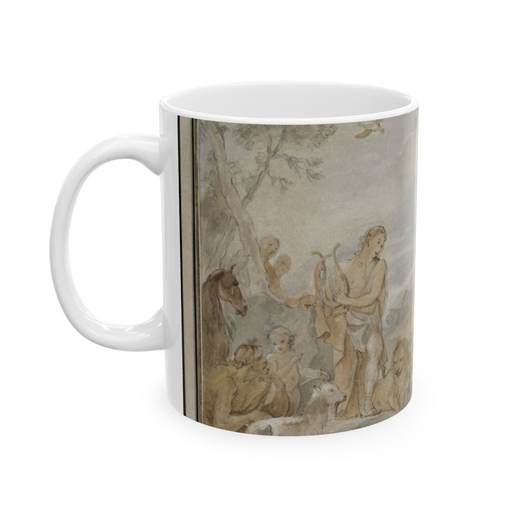
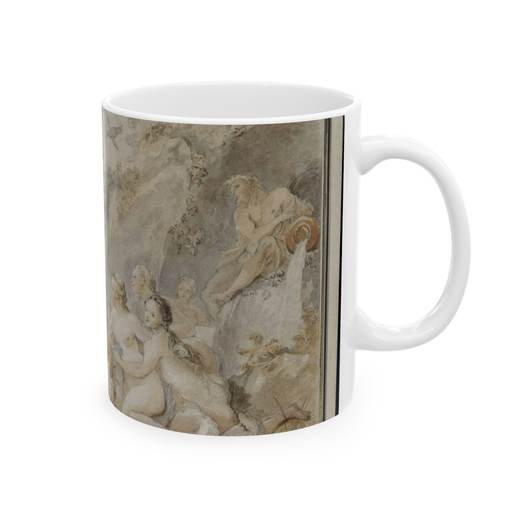
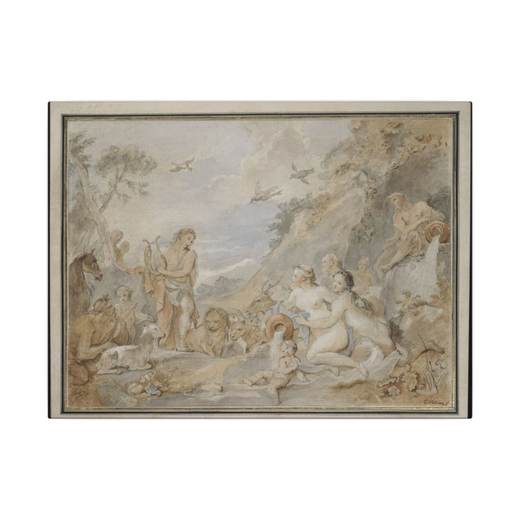
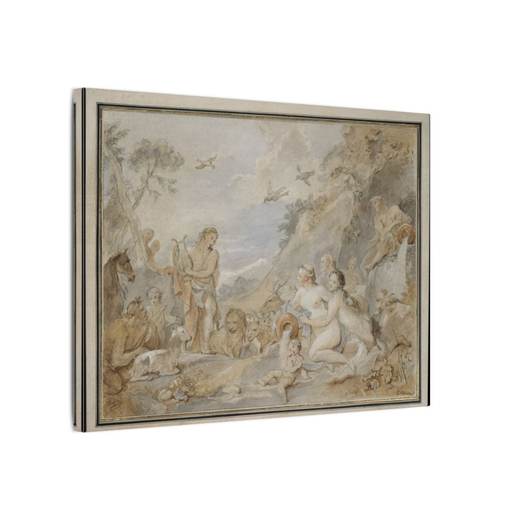
Charles Joseph Natoire made Orpheus Charming the Nymphs, Dryads, and Animals in 1757 as a pen-and-ink drawing enriched with brown and gray wash, pale watercolor, white heightening, pencil, and black chalk. Born in Nîmes and trained in Paris as a history painter, Natoire won the Prix de Rome before becoming director of the French Academy in Rome in 1751. His long, low sheet gives a classical myth the scale and finish of an independent work.
The world around it
The Academy in Rome trained French artists through antique sculpture, anatomy, life drawing, copying, and the city's active contemporary art world. Natoire also encouraged informal landscape study around Rome and Tivoli. Jean Honoré Fragonard arrived as a pensioner in 1756, one year before this drawing, while Grand Tour travelers sought antiquities and views of Italy. Orpheus therefore emerged from a culture joining classical education, modern collecting, and direct attention to the Italian landscape.
A detail to notice
In myth, Orpheus's music draws animals and even trees toward him. Here he stands left of center with his lyre while a horse, lion, sheep, deer, and goat gather almost peacefully at his feet. Nymphs and children listen beside a stream; a reclining river figure pours water from a jar, and birds cross the open sky. Natoire explored this design in at least four drawn versions, changing palette and mood. This sheet's diluted blue, pink, yellow, brown, and gray make the impossible truce look airy and provisional rather than theatrical.
Look closer: materials, scale, and subjects
The recorded object is drawing made in Pen and brown ink, brown and gray wash, pale blue, yellow, and pink watercolor and white heightening over preliminary drawing in pencil and black chalk. and held in the Robert Lehman Collection department.
Recorded dimensions include 32 3/16 x 16 3/4 in. (81.8 x 42.5 cm).
Subject terms include Birds, Orpheus, Nymphs, Deer, Horses, and Lions. Treat them as guideposts, not a complete interpretation.
Collection history and public-domain source
The collection credit line is Robert Lehman Collection, 1975.
The individual artwork page and official image were verified as Public Domain on 2026-08-23.
No Context Gallery independently uses the public-domain image. The source museum has not endorsed, sponsored, or affiliated itself with these products.
Research sources
See the products currently available with this artwork. Product choices appear only when the exact item is published, in stock, and available to purchase.