Artwork story
About The Adoration of the Magi
The artist and artwork
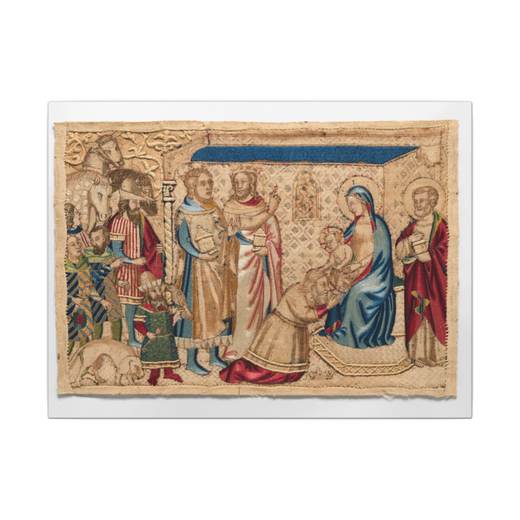
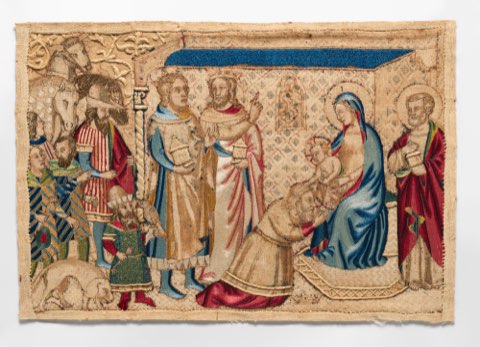
An unidentified Italian embroiderer, or workshop, made The Adoration of the Magi in the late fourteenth century. It is a textile on linen and cotton, with silk and gilt-metal-strip-wrapped silk worked in bullion, split, and stem stitches, laid work, and couching. Sepia ink supplied an underdrawing. The Met classifies the surviving rectangle as an orphrey, textile cover, or hanging, preserving uncertainty about whether it decorated a vestment, furnishing, or larger object.
The world around it
In medieval Europe, the church was one of the most important patrons of fine embroidery. Vestments and altar textiles carried costly silk and metal thread; orphreys appeared on chasubles, copes, and dalmatics. Professional embroiderers' organizations existed by the Middle Ages, and convents also produced accomplished work. Before mechanically reproduced pictures, stitched sacred scenes moved through worship in material form. Here three distant rulers recognize divinity in a child and offer precious gifts.
A detail to notice
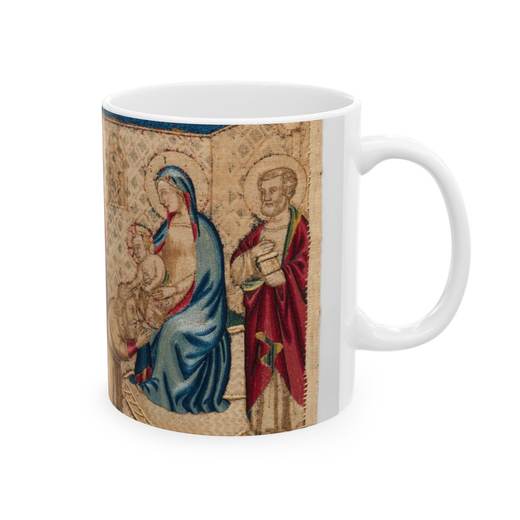
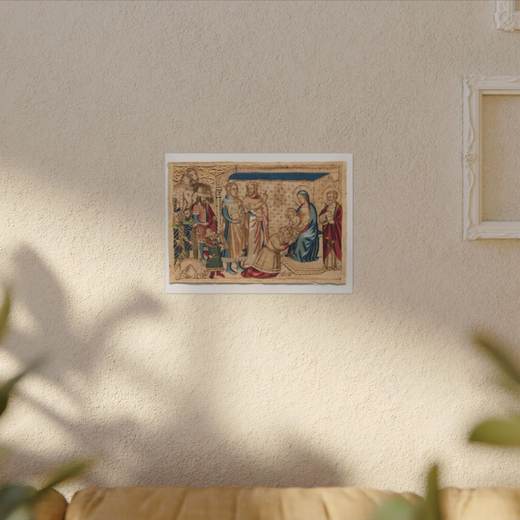
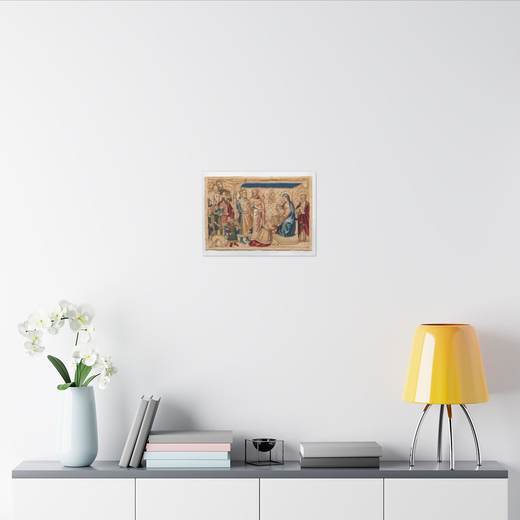
The scene unfolds like a procession from left to right. Horses and attendants crowd the edge; standing kings advance with vessels; the oldest king kneels as the child leans from Mary's lap. Joseph holds another gift at right. Blue and red silks glow, while raised pale cords outline columns, halos, garments, and throne. Many gold-wrapped threads have vanished, exposing the sepia drawing beneath. The surface shows both the maker's plan and the surviving stitches that once made the encounter flash in moving light.
Look closer: materials, scale, and subjects
The recorded object is orphrey, textile cover or hanging made in Linen and cotton plain weave underlaid with linen plain weave and embroidered with silk and gilt-metal-strip-wrapped silk in bullion, split, and stem stitches, laid work, couching, and couching padded with cotton (couched with linen). Underdrawing and wash in sepia ink. Edging: hemp plain weave and held in the Robert Lehman Collection department.
Recorded dimensions include 11 7/8 x 17 5/16 in. (30.1 x 44cm); edging width: 5/16 - 5/8 in. (0.8 - 1.6 cm).
Subject terms include Birds, Men, Dogs, Horses, Saint Joseph, and Virgin Mary. Treat them as guideposts, not a complete interpretation.
Collection history and public-domain source
The collection credit line is Robert Lehman Collection, 1975.
The individual artwork page and official image were verified as Public Domain on 2026-08-23.
No Context Gallery independently uses the public-domain image. The source museum has not endorsed, sponsored, or affiliated itself with these products.
Research sources
See the products currently available with this artwork. Product choices appear only when the exact item is published, in stock, and available to purchase.