Artwork story
About Bird
The artist and artwork
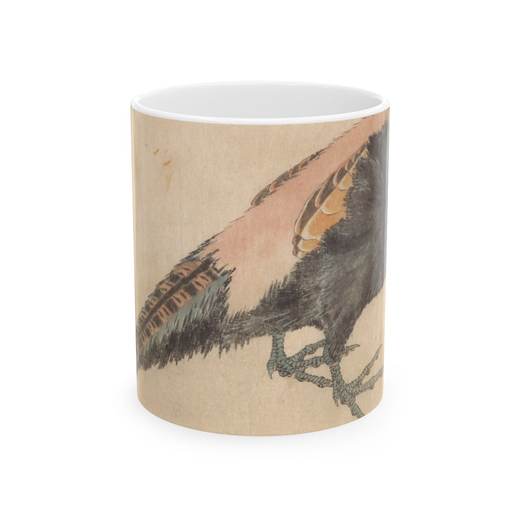
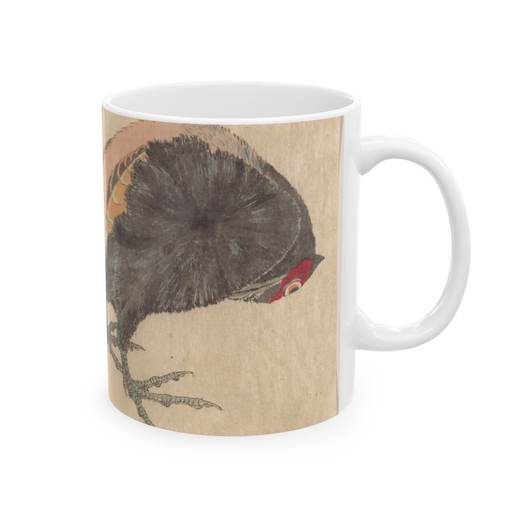
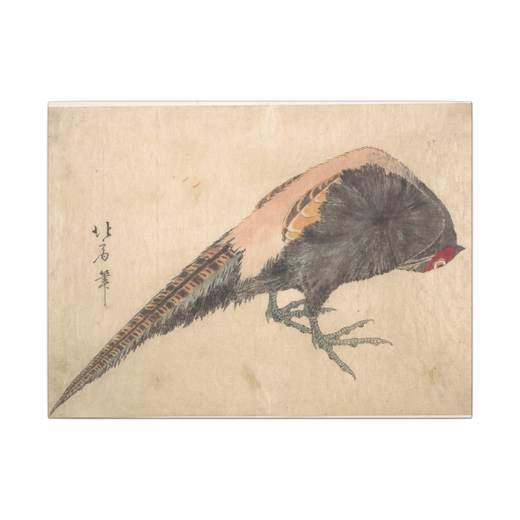
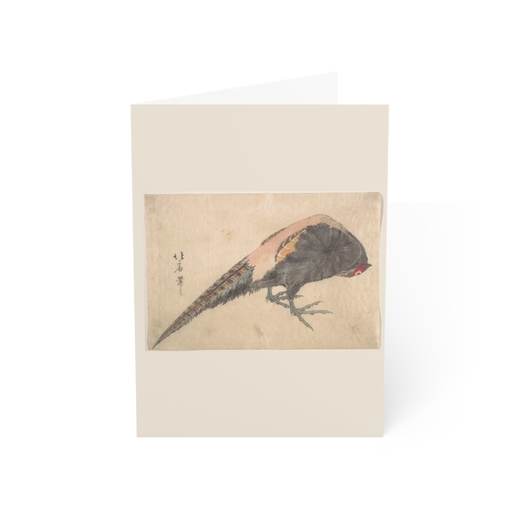
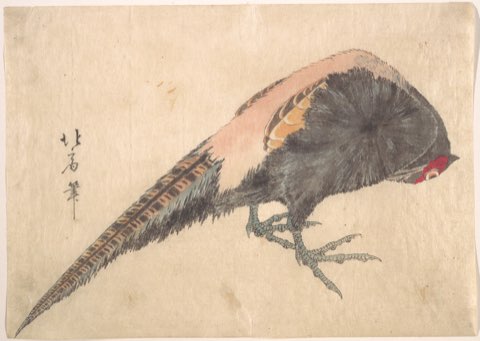
Hakusanjin Hokui designed Bird as a Japanese woodblock print in ink and color on paper. The Met records Hokui as active around 1830–40, during the Edo period, but assigns this sheet neither a specific year nor a bird species. Those open fields matter: the work should not be given a biography or zoological identity that its record cannot support. What survives is a compact nine-by-twelve-and-a-half-inch image in which close observation and economical printing turn one resting or preening bird into a complete subject.
The world around it
Hokui worked during the final decades of the Edo period, when woodblock printing supported both popular publishing and refined private commissions. Contemporary bird-and-flower surimono demonstrate how designers and printers could obtain painterly effects through subtle color, gradated ink, fine paper, and carefully controlled outlines. The Met catalogs this object simply as a woodblock print rather than identifying it as a surimono, so its original audience and occasion remain unknown. Its restraint nevertheless belongs to a visual culture that valued concentrated encounters with seasonal and natural subjects as much as crowded narrative scenes.
A detail to notice
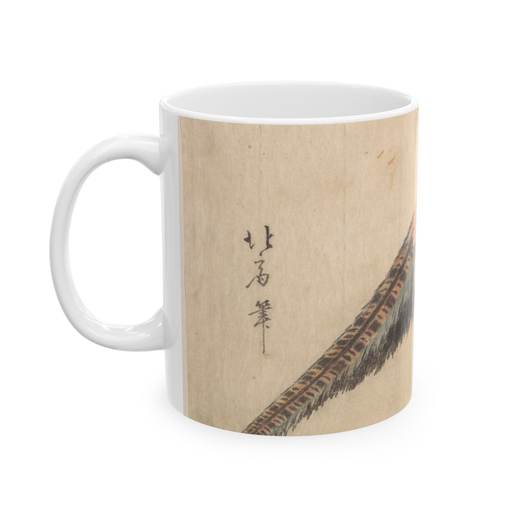
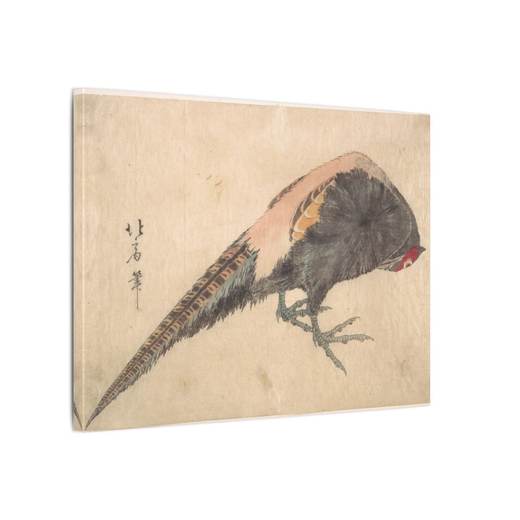
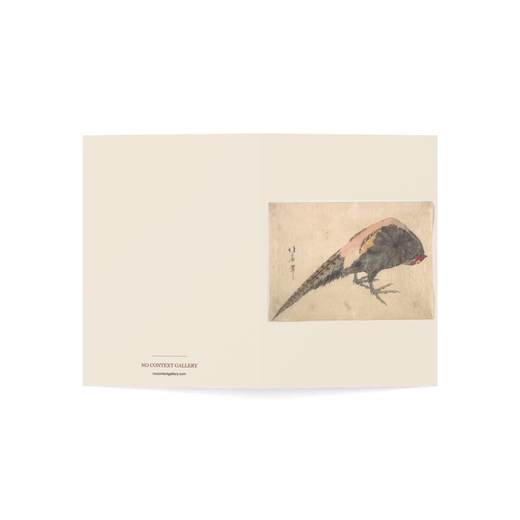
The bird compresses itself into a near-circle at upper right. A broad black mass of breast and feathers folds around the lowered head, while a pink back and layered tan wing soften the silhouette. The red face remains visible at the edge, and one bright eye prevents the pose from reading as simple sleep. Two blue-gray feet overlap below the body with every joint and claw articulated, yet there is no branch, ground, or cage to support them. A long barred tail cuts diagonally toward the lower-left corner, countered only by Hokui's vertical signature. Most of the paper remains empty, making the bird feel both weighty and suspended.
Look closer: materials, scale, and subjects
The recorded object is print made in Woodblock print; ink and color on paper and held in the Asian Art department.
Recorded dimensions include 9 x 12 1/2 in. (22.9 x 31.8cm).
Subject terms include Birds. Treat them as guideposts, not a complete interpretation.
Collection history and public-domain source
The collection credit line is H. O. Havemeyer Collection, Bequest of Mrs. H. O. Havemeyer, 1929.
The individual artwork page and official image were verified as Public Domain on 2026-08-23T20:04:15.766Z.
No Context Gallery independently uses the public-domain image. The source museum has not endorsed, sponsored, or affiliated itself with these products.
Research sources
See the products currently available with this artwork. Product choices appear only when the exact item is published, in stock, and available to purchase.