Artwork story
About Manuel Osorio Manrique de Zuñiga (1784–1792)
The artist and artwork
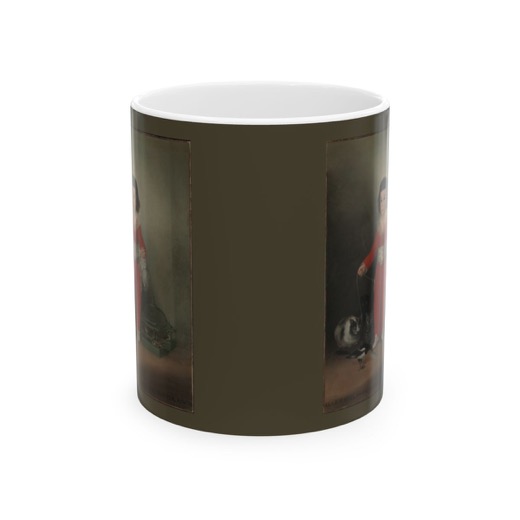
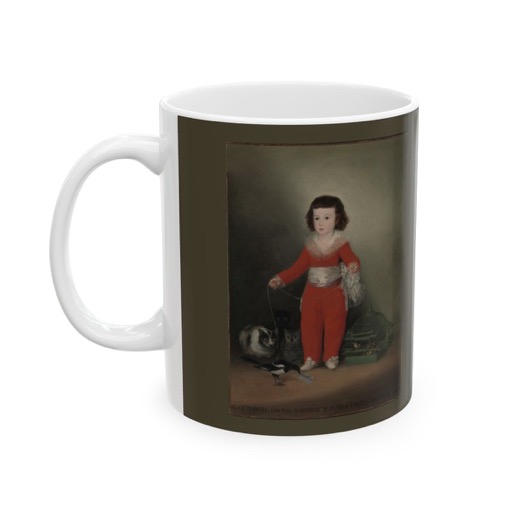
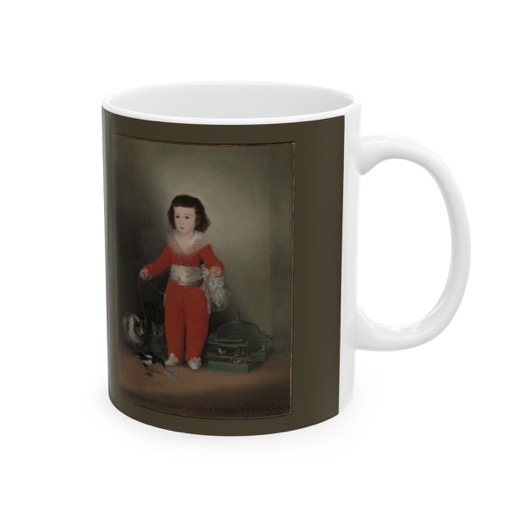
Francisco de Goya painted Manuel Osorio Manrique de Zuñiga in 1787–88 as a full-length oil-on-canvas portrait of the young son of the count and countess of Altamira. Goya had developed his career through royal tapestry designs and increasingly important portraits; the Altamira family's patronage helped carry him toward appointment as court painter under Charles IV in 1789. Here formal aristocratic portraiture becomes unusually intimate and uneasy. Manuel's brilliant red costume announces rank, while his small hands, pale face, pets, and direct gaze keep the image centered on a particular child.
The world around it
The portrait belongs to late Bourbon Spain under Charles III, an enlightened monarch whose ministers pursued economic, agricultural, and industrial reforms. The count of Altamira was a director of the Bank of San Carlos, and Goya painted several members of this powerful family between 1786 and 1788. Their commissions joined elite status, modern finance, and a newer interest in family feeling. Europe was also approaching the French Revolution: Charles IV succeeded in Spain in 1788, and the French monarchy fell the next year. Goya's court success therefore arrived just as inherited authority entered a period of extraordinary instability.
A detail to notice
Manuel stands between safety and danger. At right, finches occupy a gilded cage; at left, three wide-eyed cats stare toward his tethered magpie. The magpie holds Goya's calling card and signature in its beak, placing the painter inside the drama. The Met explains that caged songbirds could suggest innocence that is protected and privileged but also confined, while cats introduce a less domesticated threat. Manuel died at eight, several years after the portrait was made. That later fact should not turn the picture into a prophecy, but it sharpens the tension Goya already built from a vulnerable child, splendid clothing, trapped birds, a taut string, and predators waiting in shadow.
Look closer: materials, scale, and subjects
The recorded object is painting made in Oil on canvas and held in the European Paintings department.
Recorded dimensions include 50 x 40 in. (127 x 101.6 cm).
Subject terms include Birds, Boys, Portraits, and Cats. Treat them as guideposts, not a complete interpretation.
Collection history and public-domain source
The collection credit line is The Jules Bache Collection, 1949.
The individual artwork page and official image were verified as Public Domain on 2026-08-23.
No Context Gallery independently uses the public-domain image. The source museum has not endorsed, sponsored, or affiliated itself with these products.
Research sources
See the products currently available with this artwork. Product choices appear only when the exact item is published, in stock, and available to purchase.