Artwork story
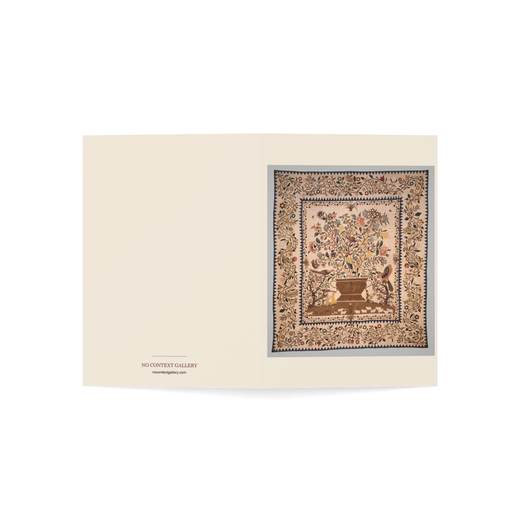
About Phebe Warner Coverlet
The artist and artwork
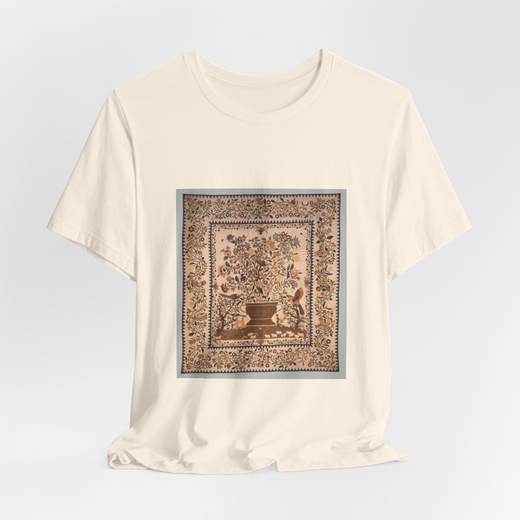
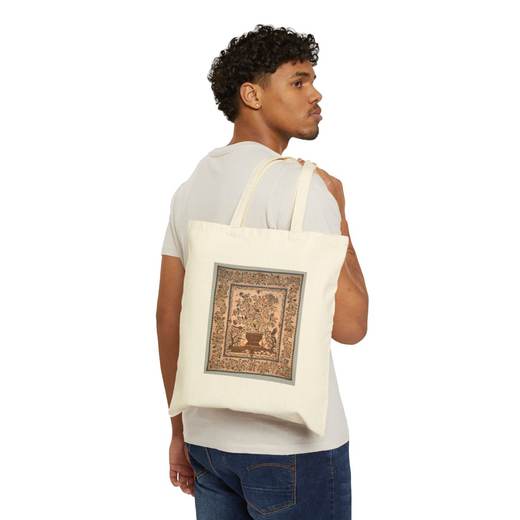
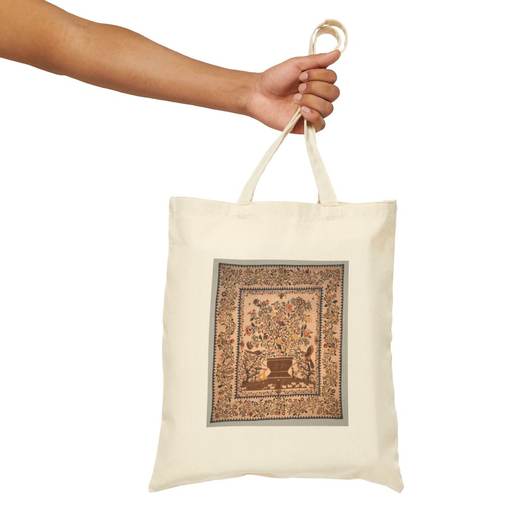
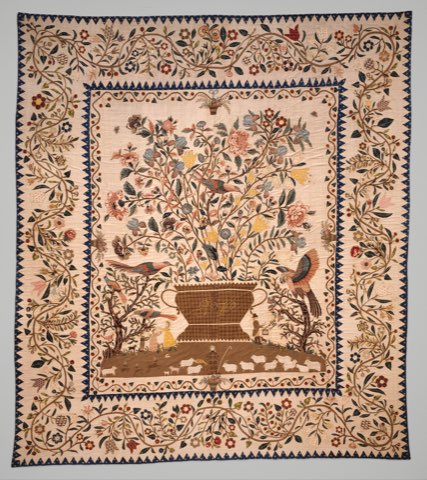
The Phebe Warner Coverlet was probably made by Sarah Furman Warner Williams around 1803 for Phebe Warner of New York. It is a single-layer linen-and-cotton bedcover, not a loom-woven Jacquard textile. Its maker cut motifs from patterned chintzes, printed linens, calicos, and plaids, then appliquéd them to a pale linen ground. A flowering tree fills the center, surrounded by birds, animals, people, flowers, and a vine border.
The world around it
The coverlet belongs to the young United States just after the turn of the nineteenth century, when printed cottons were becoming more widely available. The Met notes that many still came from England and France. American women transformed imported cloth into personal household art, while bedcovers could serve as practical furnishings, wedding gifts, family keepsakes, and evidence of skill. This example looks backward as well as forward: its central flowering tree recalls imported Indian palampores, and its landscape scenes echo needlework pictures made by young women in the eighteenth century.
A detail to notice
The initials “P W” occupy the visual center, worked in gold thread on a brown-and-plaid panel like a nameplate. Around it, the maker built an exuberant private world from cut cloth. A great bird spreads its wings at lower right; smaller birds perch throughout the tree; women stand near baskets and a cage; and a shepherd watches sheep, dark animals, and a dog. Printed blossoms are detached from their original patterns and recombined into new flowers, branches, and creatures. Sharp blue triangles divide the central design from the outer vines, framing soft botanical forms with a rhythmic sawtooth edge. The Met dates the work to about 1803 but emphasizes that its design remains close to eighteenth-century sources. Fashionable imported fabrics, older decorative traditions, household labor, and one recipient's initials are assembled into an object both useful and unmistakably individual.
Look closer: materials, scale, and subjects
The recorded object is coverlet made in Linen and cotton and held in The American Wing.
Recorded dimensions include 103 1/4 x 90 1/2 in. (262.3 x 229.9 cm).
Subject terms include Birds, Children, Men, Women, Deer, and Dogs. Treat them as guideposts, not a complete interpretation.
Collection history and public-domain source
The collection credit line is Gift of Catharine E. Cotheal, 1938.
The individual artwork page and official image were verified as Public Domain on 2026-08-23.
No Context Gallery independently uses the public-domain image. The source museum has not endorsed, sponsored, or affiliated itself with these products.
Research sources
See the products currently available with this artwork. Product choices appear only when the exact item is published, in stock, and available to purchase.