Artwork story
About "The Funeral of Isfandiyar," Folio from a Shahnama (Book of Kings)
The artist and artwork
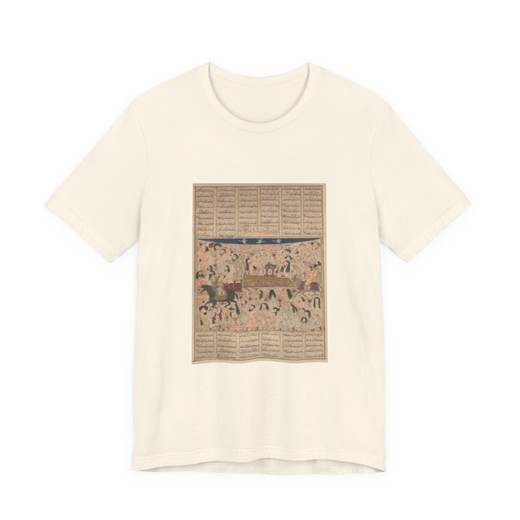
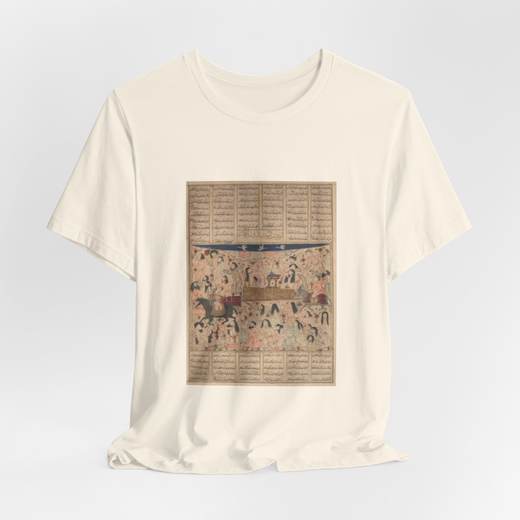
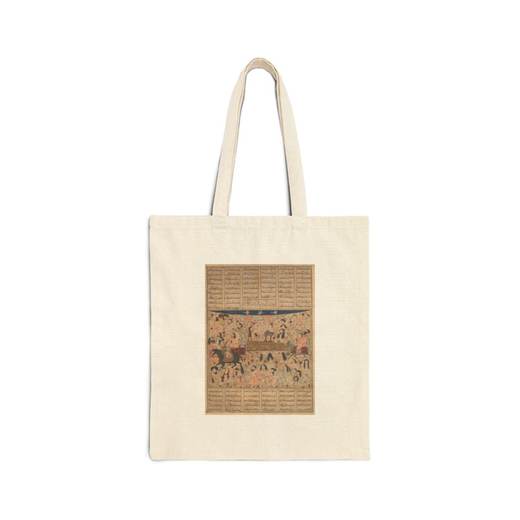
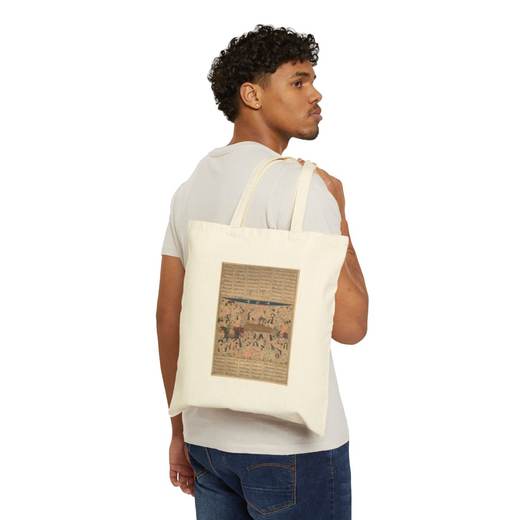
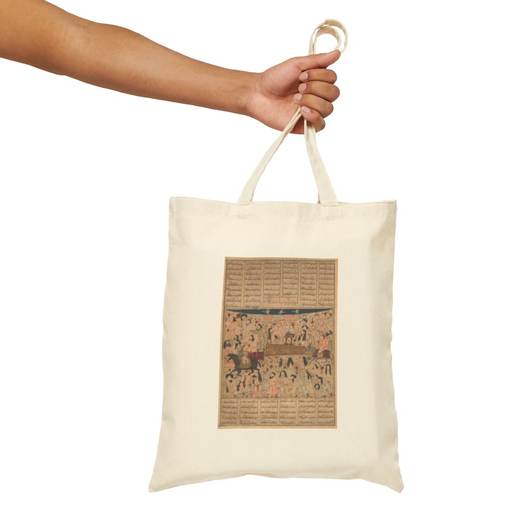
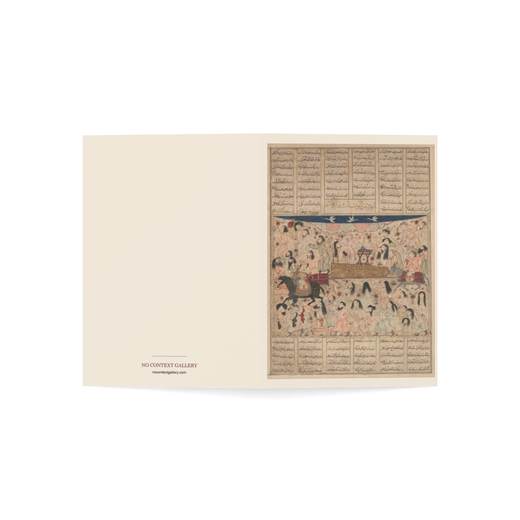
An unnamed painter made The Funeral of Isfandiyar in Tabriz during the 1330s for the manuscript now called the Great Mongol Shahnama. The author named in the record is Abu'l Qasim Firdausi, whose Persian Book of Kings had been composed around 1000, more than three centuries earlier. In ink, opaque watercolor, and gold on paper, the artist turns the hero's death into a broad procession rather than another scene of combat. A bier carrying Isfandiyar moves through mounted attendants and mourners, giving collective grief the monumental scale usually reserved for kingship and victory.
The world around it
The manuscript was produced in the final years of Ilkhanid rule in Iran, perhaps for the vizier Ghiyath al-Din, son of Rashid al-Din. The Ilkhanid empire had been founded by Mongol conquerors and became a meeting ground for Persian, Central Asian, and East Asian traditions; it fragmented after the last ruler's death in 1335. Illustrated Shahnamas were still new. With little fixed pictorial tradition to constrain them, court artists could choose episodes and invent compositions that connected Iran's pre-Islamic epic past to the politics and material culture of their Mongol-era world.
A detail to notice
Grief is shown through hair as much as through faces. Several mourners wail and pull at locks worn loose, a visible sign of mourning that repeats across the procession like a physical refrain. The artist uses strong contour lines and thin color washes that the Met compares with contemporary Chinese brush painting, so the page combines monumental figures with unexpectedly fluid handling. Isfandiyar had survived lions, a dragon, a sorceress, and the Simurgh before Rustam killed him, but the painting does not return to those feats. It concentrates on what follows heroism: a body carried home and a community made visibly disordered by loss.
Look closer: materials, scale, and subjects
The recorded object is folio from an illustrated manuscriptf made in Ink, opaque watercolor, and gold on paper and held in the Islamic Art department.
Recorded dimensions include Page: Ht. 22 13/16 in. (58 cm); W. 15 3/4 in. (40 cm); Mat: Ht. 24 in. (61 cm); W. 19 1/2 in. (49.5 cm).
Subject terms include Men, Horses, and Funerals. Treat them as guideposts, not a complete interpretation.
Collection history and public-domain source
The collection credit line is Purchase, Joseph Pulitzer Bequest, 1933.
The individual artwork page and official image were verified as Public Domain on 2026-08-23.
No Context Gallery independently uses the public-domain image. The source museum has not endorsed, sponsored, or affiliated itself with these products.
Research sources
See the products currently available with this artwork. Product choices appear only when the exact item is published, in stock, and available to purchase.