Artwork story
About Horsewoman
The artist and artwork
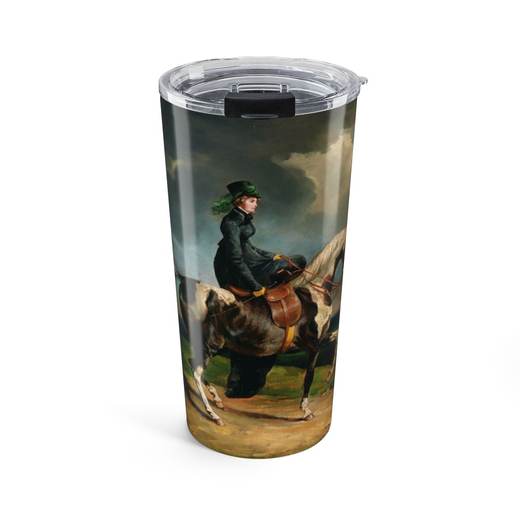
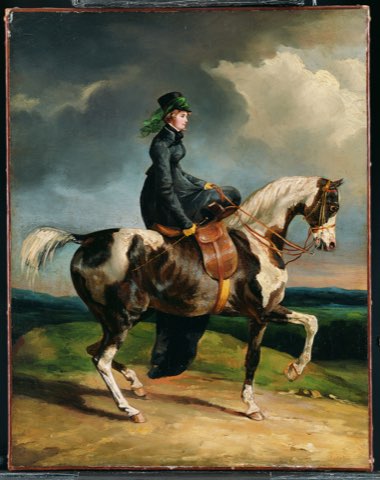
Théodore Géricault painted Horsewoman in 1820 or later in oil on canvas. The French Romantic artist was an accomplished rider who studied horses throughout his career. His stay in England in 1820–21 inspired works about elegant horsemanship and sport. Here an unidentified, fashionably dressed woman rides sidesaddle while holding her horse to a measured gait. Rider, animal, costume, and control become the picture’s subject.
The world around it
The painting belongs to the unsettled years immediately after Napoleon’s defeat in 1815. Restored peace allowed French and British travelers and ideas to move across the Channel. The Met describes British landscape, watercolor, and literary innovations as important forces in French Romanticism, while Géricault’s Raft of the Medusa drew a vast London audience in 1820. Romantic art had grown from disillusionment with Enlightenment faith in reason and order after the French Revolution; emotion, individual experience, and nature’s unpredictable power took on new importance. Equestrian dress also carried practical and social meaning. Riding clothes and tack could signal fashion, rank, leisure, and mastery as clearly as a conventional portrait costume.
A detail to notice
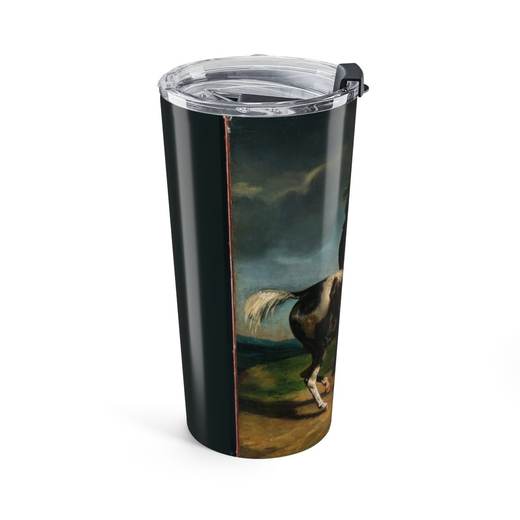
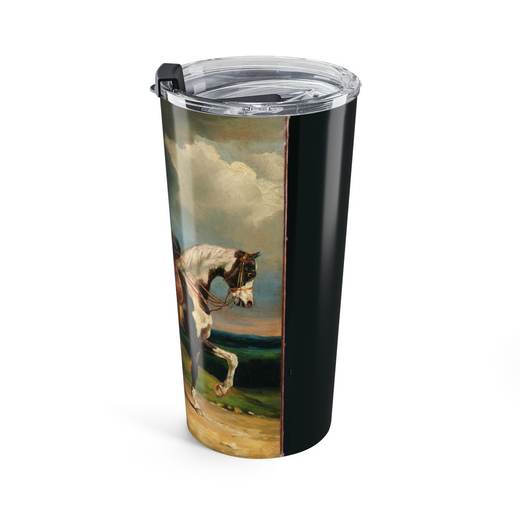
Horse and rider move across the canvas in a friezelike profile, yet the scene is built from contrasts. The piebald horse lifts its right foreleg and bends its neck beneath white mane; taut red reins cross its patterned body. Above it, the rider’s black habit forms a controlled vertical, while a brilliant green ribbon streams from her dark hat. Her face remains composed, and neither she nor the horse appears distracted by the portentous cloud bank pressing across the sky. Géricault’s title also carries an older idea. The traditional French horsewoman was called an Amazone, a word drawn from ancient stories of warrior women celebrated for courage in battle. He converts that legendary type into a modern woman whose identity remains unresolved: poised, fashionable, and visibly in command without needing a battlefield.
Look closer: materials, scale, and subjects
The recorded object is painting made in Oil on canvas and held in the European Paintings department.
Recorded dimensions include 17 1/2 x 13 3/4 in. (44.5 x 34.9 cm).
Subject terms include Portraits, Women, and Horses. Treat them as guideposts, not a complete interpretation.
Collection history and public-domain source
The collection credit line is Bequest of Mrs. Charles Wrightsman in honor of Mercedes Bass, 2019.
The individual artwork page and official image were verified as Public Domain on 2026-08-24.
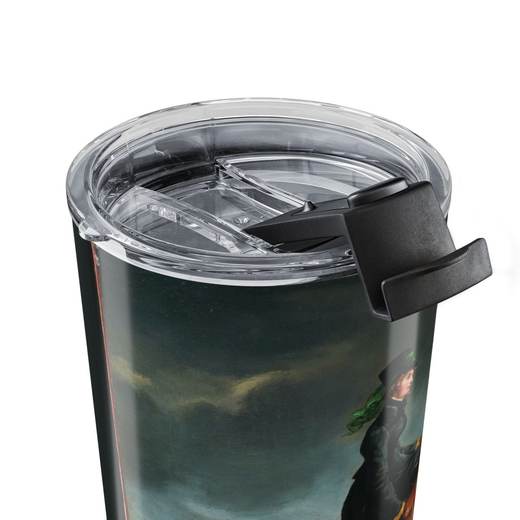
No Context Gallery independently uses the public-domain image. The source museum has not endorsed, sponsored, or affiliated itself with these products.
Research sources
See the products currently available with this artwork. Product choices appear only when the exact item is published, in stock, and available to purchase.