Artwork story
About The Flower Girl
The artist and artwork
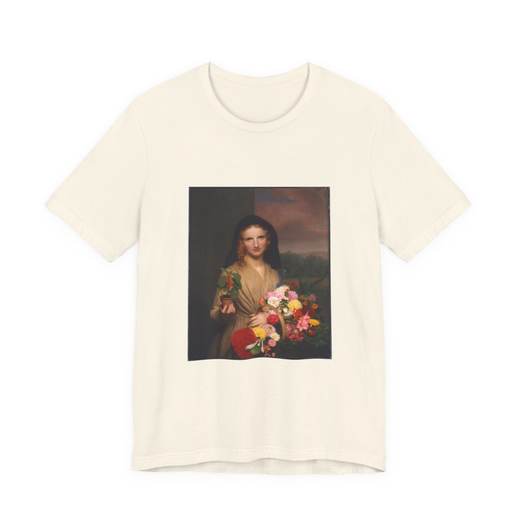
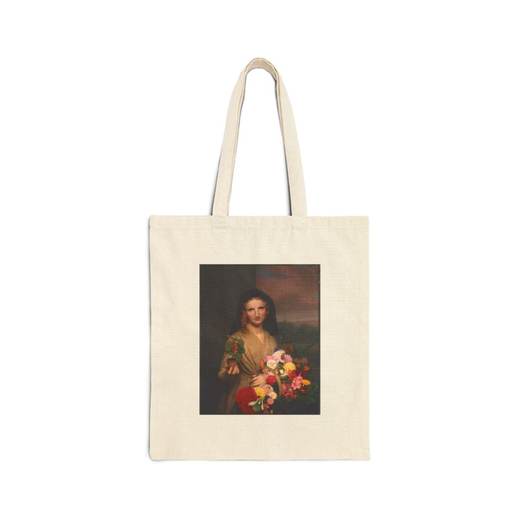
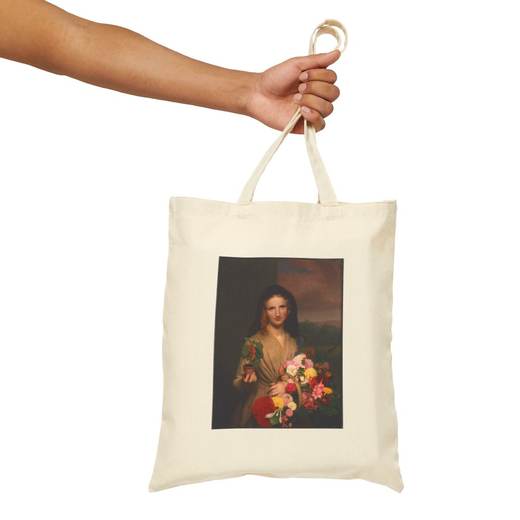
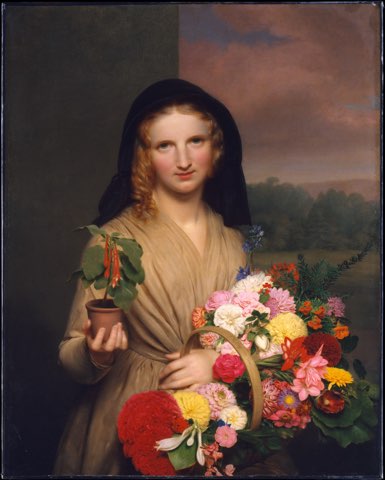
Charles Cromwell Ingham painted The Flower Girl in 1846 as an oil-on-canvas genre picture that also displays the precision of portraiture and still life. Born in Ireland, Ingham had trained in Dublin before immigrating to New York with his family in 1816. He became especially known for highly finished portraits of women. Here a plainly dressed street seller faces the viewer with a potted fuchsia in one hand and a basket crowded with almost twenty kinds of flowers in the other.
The world around it
Mid-nineteenth-century New York was becoming a larger commercial and immigrant city while its artists built permanent institutions and a public exhibition culture. Ingham helped found the National Academy of Design and served in its leadership. The Met says he knew European images of street vendors, but his choice of a flower girl rather than a newsboy also matched his preference for female models and his skill at botanical description. The painting was probably conceived as an exhibition piece: patron Jonathan Sturges bought it directly from Ingham in 1846, then lent it back for the Academy's 1847 exhibition, where artists showed their best work to critics, patrons, and the public.
A detail to notice
The basket turns one picture into several genres at once. Its dense arrangement is an independent flower painting nested inside a street-vendor scene and an idealized female portrait. Roses, dahlias, asters, and other blooms crowd forward in distinct colors and textures, while the potted fuchsia is isolated against the sitter's dress so its red bells can be read clearly. The Met explains that her offering gesture recalls Flora, the Roman goddess of flowers, and that the fuchsia symbolized love. Ingham therefore elevates ordinary selling into classical allegory. Even his signature participates in the display: the curved basket handle carries “C. C. Ingham 1846,” making the artist's name seem physically woven through the flowers he was showing he could paint.
Look closer: materials, scale, and subjects
The recorded object is painting made in Oil on canvas and held in The American Wing.
Recorded dimensions include 36 x 28 3/8 in. (91.4 x 72.1 cm).
Subject terms include Girls, Portraits, and Flowers. Treat them as guideposts, not a complete interpretation.
Collection history and public-domain source
The collection credit line is Gift of William Church Osborn, 1902.
The individual artwork page and official image were verified as Public Domain on 2026-08-23.
No Context Gallery independently uses the public-domain image. The source museum has not endorsed, sponsored, or affiliated itself with these products.
Research sources
See the products currently available with this artwork. Product choices appear only when the exact item is published, in stock, and available to purchase.