Artwork story
About The Strange Thing Little Kiosai Saw in the River
The artist and artwork
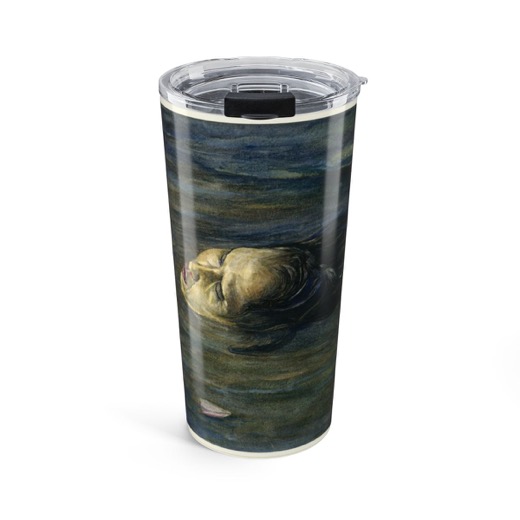
John La Farge painted The Strange Thing Little Kiosai Saw in the River in 1897 with watercolor and gouache on Japanese tissue mounted to white wove paper. The American painter, writer, and decorator absorbed Japanese color, flat pattern, and asymmetrical design into his practice. He traveled through Japan with Henry Adams in 1886, using watercolor for travel studies, illustrations, and exhibition works. Eleven years later he made watercolors inspired by Japanese folklore and stories of mystery, deception, and hallucination.
The world around it
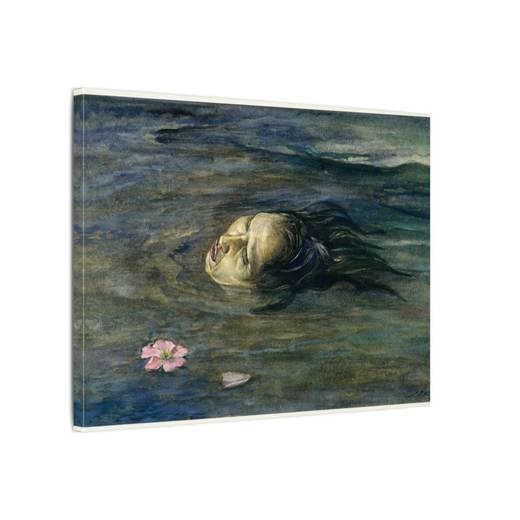
The work emerged amid late-nineteenth-century American fascination with Japanese art, nourished by collections, exhibitions, publications, and travel. La Farge's subject came from the life of Japanese painter Kiosai, now usually called Kawanabe Kyosai. As a child, Kiosai mistook a strange object floating in a river for the fairy tortoise of a nursery tale. After pulling it ashore, he discovered a political murder victim's severed head. The young artist reportedly took it home to draw before giving it an honorable burial. La Farge turned that episode into a study of perception.
A detail to notice
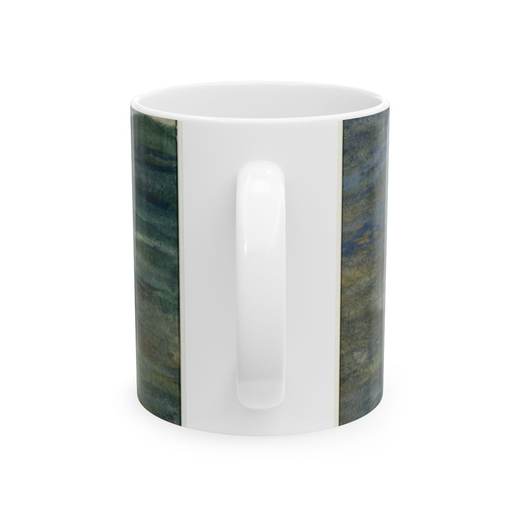
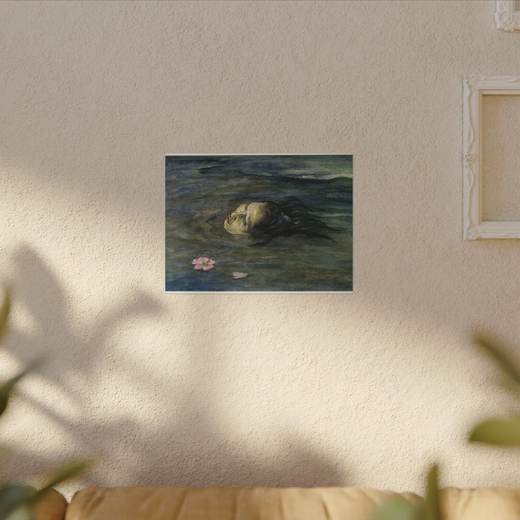
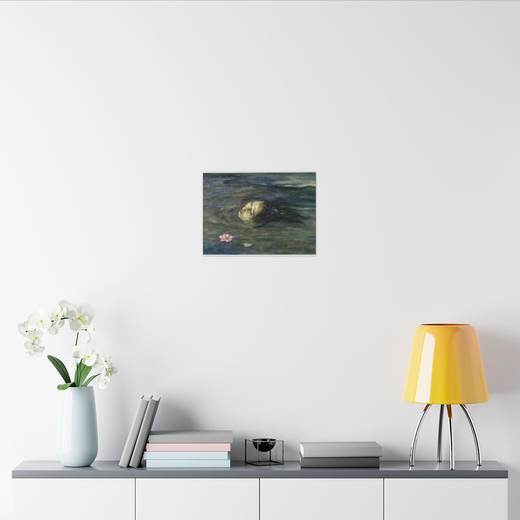
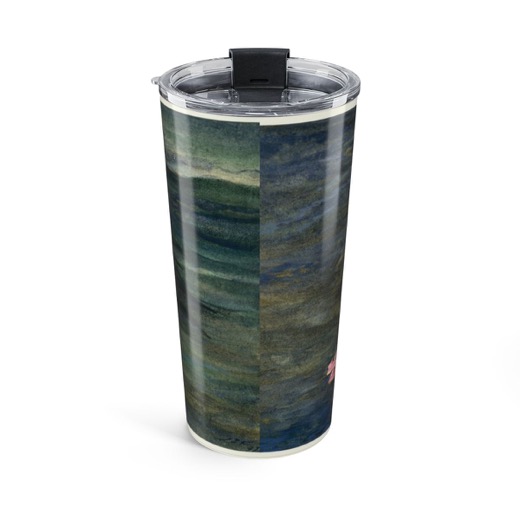
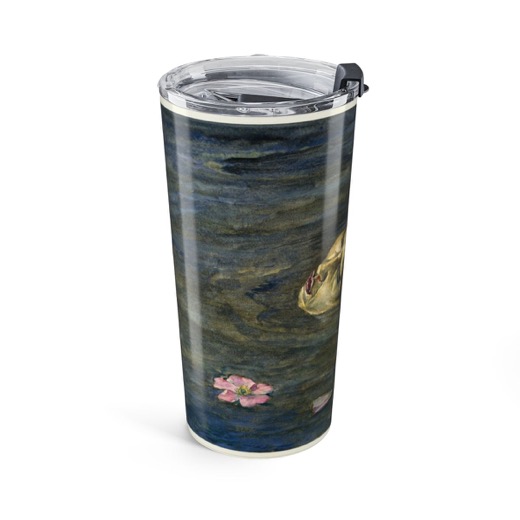
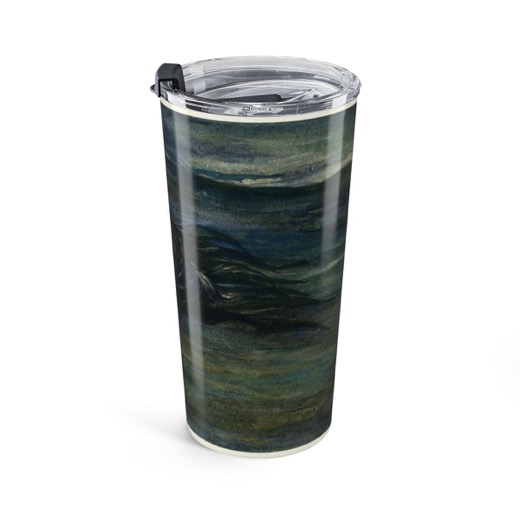
At first glance, the pale face resembles someone sleeping in dark water. It floats below center, eyes closed and lips softly colored, while long black hair streams right and nearly merges with blue-green river strokes. Then a small line of red beneath the nose changes the image: calm becomes evidence of violence. A single pink flower and loose petal add beauty and mourning. La Farge gives the head no body, bank, witness, or scale; surrounding water becomes an empty field. The composition makes the viewer repeat Kiosai's mistaken recognition, first seeing an alluring shape, then understanding something terrible. Its horizontal quiet does not lessen the horror. Instead, elegant color and sparse asymmetry hold curiosity, revulsion, and compassion together in what The Met's publication calls macabre lyricism.
Look closer: materials, scale, and subjects
The recorded object is watercolor made in Watercolor and gouache on Japanese tissue laid down on white wove paper and held in The American Wing.
Recorded dimensions include 12 7/16 x 18 3/16 in. (31.6 x 46.2 cm).
Subject terms include Heads and Rivers. Treat them as guideposts, not a complete interpretation.
Collection history and public-domain source
The collection credit line is Rogers Fund, 1917.
The individual artwork page and official image were verified as Public Domain on 2026-08-23.
No Context Gallery independently uses the public-domain image. The source museum has not endorsed, sponsored, or affiliated itself with these products.
Research sources
See the products currently available with this artwork. Product choices appear only when the exact item is published, in stock, and available to purchase.