Artwork story
About Scene with a Warning Against Venereal Disease in a Circle at Center
The artist and artwork
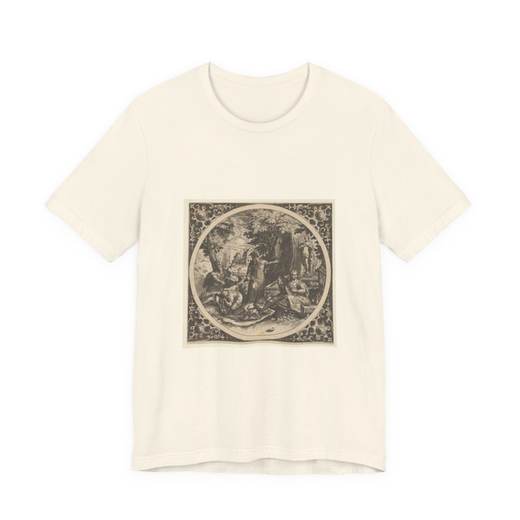
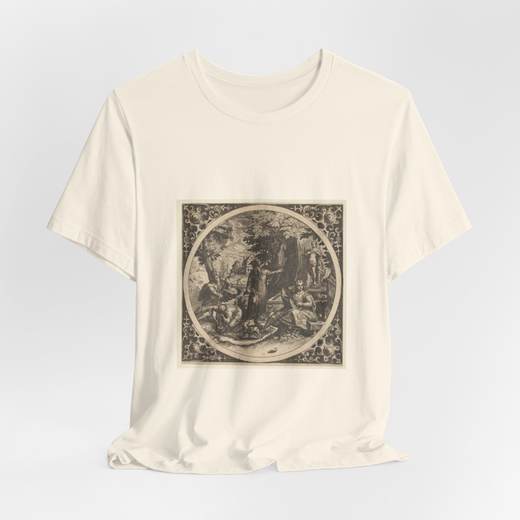
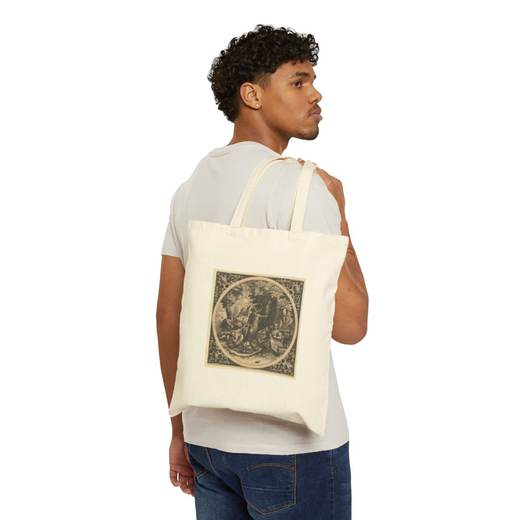
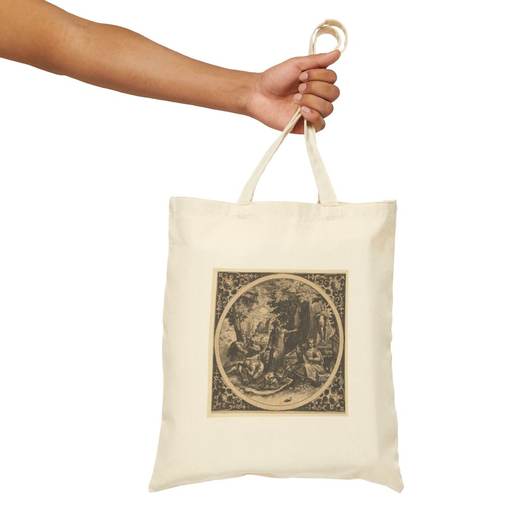
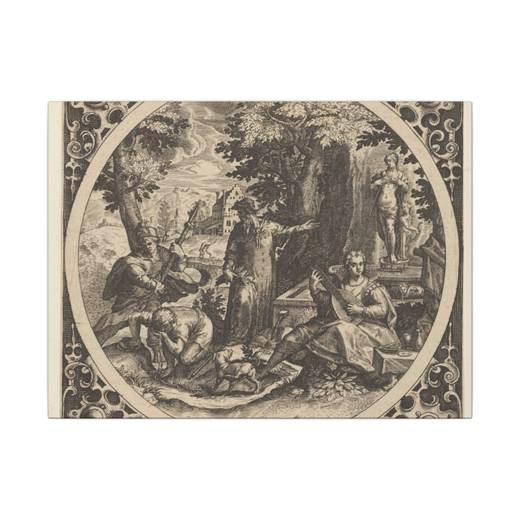
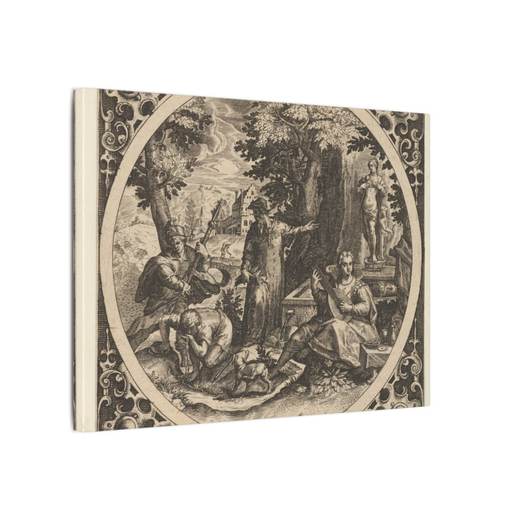
Theodor de Bry engraved this untitled moral warning between 1580 and 1600. Born in Liège and later active as an engraver and publisher in Frankfurt, he made the sheet as a reverse copy of Johann Sadeler I’s print after a design by Munich painter Christoph Schwarz. The image is both narrative print and ornament: a circular landscape occupies the center of a square sheet, surrounded by tightly curled strapwork against a crosshatched ground.
The world around it
Late-sixteenth-century European print culture allowed designs to travel across artists, workshops, cities, and generations. Engraving produced repeatable images, and publications increasingly joined symbolic pictures to concise moral ideas. De Bry himself engraved and published an emblem book in Frankfurt in 1593. This scene belongs to that world of portable instruction. Rather than describing venereal disease medically, it turns bodily danger into an allegory that a viewer must decode from opposed figures, gestures, and sources of water.
A detail to notice
At right, a woman plays a lute beside a fountain topped by Venus and Cupid; a drinking cup and food sit close by. At left, another man crouches at a stream while a dog urinates into the water above him. A spear-bearing figure watches, and the standing man at center points toward the fountain as he faces the contaminated stream. The warning is built as a visual choice between two sides. Because de Bry copied Sadeler’s print in reverse, even that carefully staged left-and-right argument arrived through an act of translation.
Look closer: materials, scale, and subjects
The recorded object is print; ornament & architecture made in Engraving and held in the Drawings and Prints department.
Recorded dimensions include Sheet: 5 5/16 × 5 3/8 in. (13.5 × 13.6 cm).
Subject terms include Musical Instruments, Men, Women, Dogs, and Drinking. Treat them as guideposts, not a complete interpretation.
Collection history and public-domain source
The collection credit line is The Elisha Whittelsey Collection, The Elisha Whittelsey Fund, 1951.
The individual artwork page and official image were verified as Public Domain on 2026-08-23.
No Context Gallery independently uses the public-domain image. The source museum has not endorsed, sponsored, or affiliated itself with these products.
Research sources
See the products currently available with this artwork. Product choices appear only when the exact item is published, in stock, and available to purchase.